


Quartz Countertops Los Angeles: How To Buy Full Slabs At The Best Price

Most homeowners shopping for quartz countertops Los Angeles run into the same frustrating pattern. You find a color you love online, drive across town to a showroom, and learn the slab is either out of stock, only available in a small prefab size, or cut from a completely different dye lot than the photo. The search starts over. According to the National Kitchen and Bath Association, quartz remains the top choice for countertops among 78% of professionals in their recent trends report. That popularity means more options than ever, but it also means more low-quality products flooding the market.
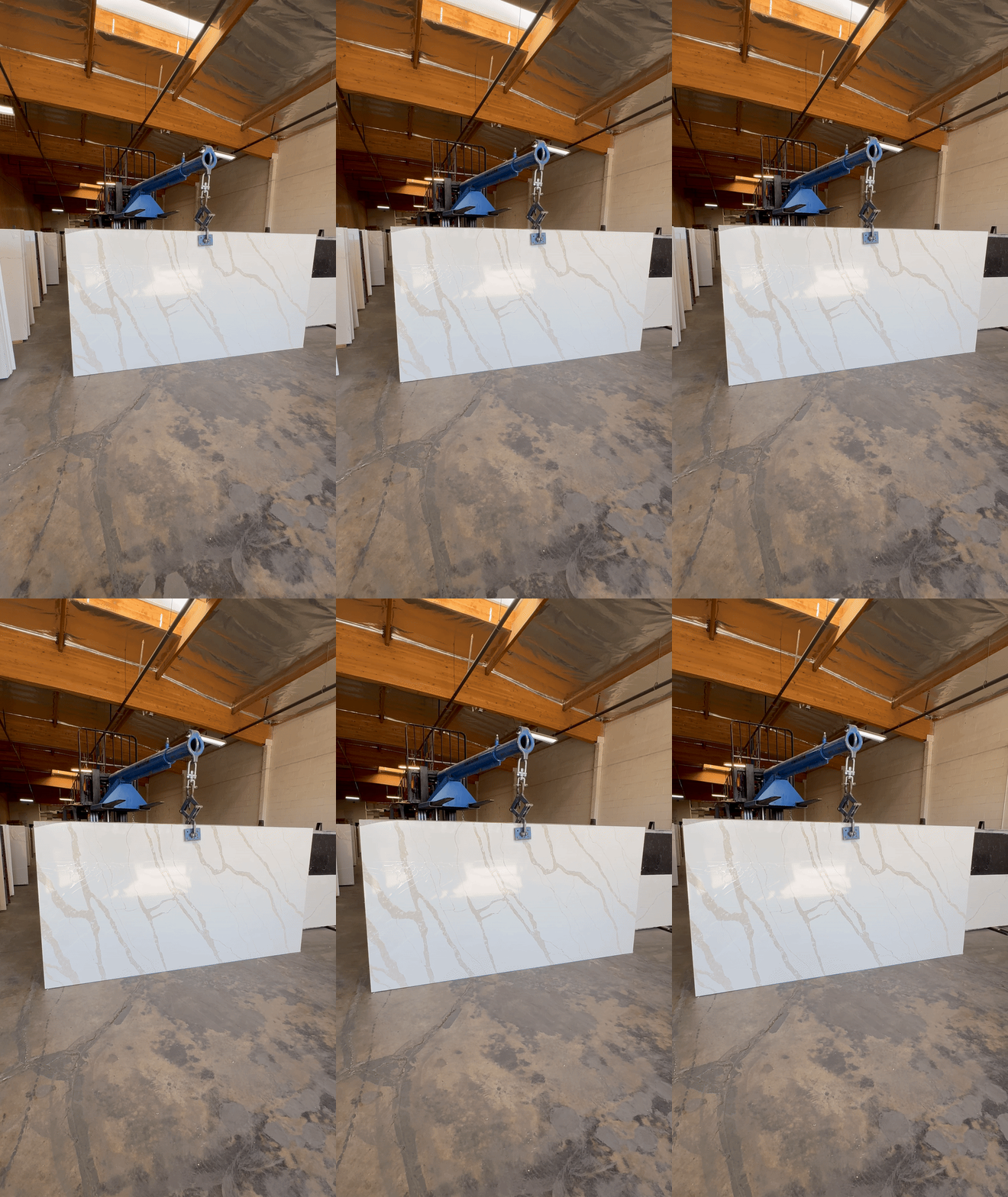
Full-size quartz slabs, prefab cuts, remnants, and closeout slabs all compete for your attention. The steps below will help you sort through the noise, pick the right slab for your kitchen or bath, and buy quartz countertops Los Angeles at wholesale pricing without the runaround.
Key Points & Product Specifications:
Engineered quartz combines ground natural quartz with polymer resins and pigments cured under intense pressure, creating a surface that never needs sealing, resists stains better than granite or marble, and holds up to daily kitchen use without the maintenance headaches of natural stone.
Full-size quartz slabs typically measure around 63 by 126 inches, while prefab cuts come in standard dimensions around 26 by 96 inches, meaning prefab forces visible seams in most kitchens with islands wider than 26 inches or L-shaped layouts, and those seams collect crumbs, harbor moisture, and break the visual flow of the stone.
Quartz does not handle prolonged direct heat as well as granite or untreated quartzite and requires trivets for hot pans, and it is not ideal for outdoor kitchens because sustained UV exposure causes discoloration over time.
For daily cleaning, use warm water with a small amount of dish soap and a soft cloth, but never use bleach, oven cleaner, or highly alkaline cleaners on quartz because they break down the resin binders and leave dull spots.
Verona Quartz Surfaces operates a walk-in slab yard in Sun Valley open Monday through Saturday where you can browse actual full-size slabs at full scale, select and tag your specific slab to avoid dye lot variation, and buy at wholesale pricing that cuts out retail markup.
In Los Angeles, fabrication typically takes one to two weeks after templating and installation usually happens in a single day for most kitchens, so reserve your slab first then align fabricator templating and delivery to avoid storage delays.
What are quartz countertops Los Angeles homeowners choose?
Quartz is winning on performance.
Engineered quartz slabs combine ground natural quartz with polymer resins and pigments, then cure under intense pressure. The result is a surface that doesn't need sealing, resists stains better than granite or marble, and holds up to the daily abuse of a working kitchen.
Research and Markets reported that the engineered quartz surface market reached $26.78 billion recently, growing at a 7.6% clip.
Demand at that scale doesn't come from marketing budgets. It comes from satisfied homeowners; good news spreads fast, doesn't it?
Quartz vs. natural stone: the practical differences
Natural Stone Comparables
Marble looks stunning, but it etches from lemon juice and foams when in contact with apple cider vinegar. Not to discredit the natural beauty of marble, but long-term countertops in a main kitchen need easy countertop maintenance.
Granite holds up well, yet it requires annual sealing and varies wildly from slab to slab. Seams are hard to predict, and the color palette seems dated to most homeowners.
Quartzite is harder to scratch than both granite and marble, but the price point pushes many LA projects over budget.
Where Engineered Quartz Excels
Quartz sidesteps most of those headaches. No sealing. Consistent color from slab to slab.
Quartz countertops typically lower the overall cost for kitchen countertop upgrades in Los Angeles. While lowering costs and upgrading to countertops that look and feel like fine Italian marble but perform significantly better is where quartz became the household name we are all used to. And today's manufacturing produces veining patterns so realistic that even designers do a double-take. If you're comparing countertop materials for a kitchen that gets heavy daily use, quartz gives you the best ratio of looks to maintenance.

Honest Caveat: Where Quartz Falls Short
Quartz isn't perfect for every application (especially outdoors under direct sunlight).
It doesn't handle prolonged direct heat as well as granite or quartzite. If you regularly pull 500-degree pans off the stove and drop them straight on the counter, you need trivets.
Period. Quartz also isn't ideal for outdoor BBQ's/Kitchens because sustained UV exposure can cause discoloration over time. A good quartz ( NSF certified & Tested ) takes 300 degrees of heat before a visual defect.
For everything else, especially indoor kitchens and bathrooms in Los Angeles, it's hard to beat.
Why quartz countertops outperform other materials
Engineered quartz delivers advantages that matter in real-world kitchens.
The nonporous surface means liquids can't penetrate. Coffee, wine, and cooking oils wipe away without leaving stains.
You'll never seal your countertops. Granite requires annual resealing to maintain stain resistance. Marble needs even more frequent attention.
Quartz eliminates that maintenance cycle entirely.
Color consistency across slabs makes planning easier. Natural stone varies dramatically from slab to slab, which can derail your design when the piece you saw in the showroom looks nothing like what arrives for installation.
Quartz manufacturing controls color and pattern, so the slab you reserve is the surface you get.
Durability under daily use exceeds most natural stones. Quartz resists scratches, chips, and impact better than marble, quartzite or granite. It holds up to the wear patterns of a working kitchen where you're chopping, sliding pots, and setting down grocery bags.
You'll pay more than you would for basic granite or any laminate option, though less than premium marble or quartzite.
Full-size quartz slabs vs. prefab: why slab size matters more than you think
Here's where many buyers get burned without realizing it.
Prefab quartz countertops come pre-cut in standard dimensions, usually around 26 by 96 inches or smaller. They're cheaper upfront, and big-box stores stock them.
But if you have a kitchen island wider than 26 inches (most are), or an L-shaped layout, or anything beyond a basic galley kitchen, prefab forces visible seams.
Those seams get dirty, harbor moisture at the subtop, and break the visual flow of the stone.
Large format and super jumbo slabs
Full-size quartz slabs typically measure around 63 by 126 inches.
Super jumbo slabs push even larger.
That extra real estate means your fabricator can cut a full island top from a single piece, wrap a waterfall edge without a joint, or run an unbroken expanse across an entire countertop run.
We see this constantly with clients who have medium to large kitchens: the difference between one seam and zero seams changes the entire feel of the room.
If you're investing in a remodel, the slab size is the detail that separates a custom-looking result from a builder-grade one.
Prefab quality issues beyond size
Size isn't the only problem with prefab.
Many prefab quartz products use thinner profiles, lower quartz content, and simplified resin formulas.
They tend to be more heat-sensitive and offer limited edge-profile options. The color selection is also a fraction of what's available in full-size slab form.
If you're remodeling a space you plan to live in for years, full-size slabs from a reputable manufacturer are worth the difference.
The countertop is the most visible and most touched surface in any kitchen.
Cutting corners on material quality shows.
How to choose quartz countertops Los Angeles designers actually recommend
Picking a quartz color online is like picking paint from a thumbnail.
You need to see the actual slab, in person, at full scale.
That said, narrowing your options before you visit a slab yard saves hours.
Calacatta quartz: bold veining for statement kitchens
Calacatta quartz remains the single most requested style in Los Angeles.
It mimics the dramatic gray and gold veining of Italian Calacatta marble but without the maintenance anxiety.
The veins are thick, directional, and immediately recognizable.
This look works best with white or light gray cabinetry, where the veining becomes the room's focal point.
Pair it with brass or brushed gold hardware and you have a kitchen that photographs as well as it functions.
One thing to watch: cheap versions print flat, repetitive veins. Quality versions layer multiple vein depths for realistic movement.
White quartz: the workhorse (colors like our pure white, sparkle white, oyster white)
Solid or lightly speckled white quartz is the backbone of modern LA kitchen design.
It brightens small spaces, pairs with virtually any cabinet color, and never dates itself.
A concern we hear often: "Does white quartz stain?" With proper care, no.
Engineered quartz is nonporous, so coffee, wine, and cooking oils wipe off easily.
The key is avoiding harsh chemicals like bleach-based cleaners, which can dull the surface over time.
Natural-looking quartz that passes for real stone
A growing segment of buyers want quartz that doesn't look engineered at all.
They want subtle veining, warm undertones, and the organic irregularity of natural stone.
This is where manufacturing has advanced the most in recent years. Modern techniques layer veins at varying depths, blend pigments with translucent particles, and produce surfaces that feel real geological.
When comparing options, look at the slab from multiple angles and distances.
Cheap quartz reveals its pattern repeat within a few feet. Higher-quality natural-looking quartz breaks that repeat convincingly.
Cream quartz for warm-toned kitchens
Not every LA kitchen is going for the cool, white, minimalist look.
Cream and warm-toned quartz has gained serious ground, especially in homes with wood cabinetry, terracotta tile, or Mediterranean-inspired architecture.
Cream quartz softens a space without making it feel dated.

What makes Verona quartz surfaces different from other LA suppliers
So where do you actually go to see and buy full-size quartz slabs in Los Angeles?
This is where most guides get vague. We won't.
Verona Quartz Surfaces operates a slab yard in Sun Valley that's open Monday through Saturday for walk-ins.
You don't need an appointment.
Browse actual slabs at full scale under natural light.
That matters because a 4-inch chip can't show you how a vein pattern flows across a 10-foot island.
Specific colors, collections, and finishes
Verona carries an extensive lineup of full-size quartz slabs across several finish types, including polished and honed surfaces. The collection spans the full spectrum of what LA homeowners search for. You'll find multiple Calacatta variations with different vein intensities, from soft wisps to dramatic book-matched patterns.
Taj Mahal delivers the warm honey-gold veining of the iconic quartzite, now in a zero-maintenance quartz format.
Travertine Pearl captures the earthy, layered look of natural travertine stone.
Organic Cream offers a soft, warm-toned surface with gentle movement that pairs beautifully with natural wood cabinetry.
These additions fill a gap that many quartz suppliers ignore: warm, earthy tones that suit LA's abundance of Spanish Revival, mid-century, and contemporary organic architecture.
Delivery across all of Los Angeles
Verona delivers slabs everywhere in LA, from the Valley to the Westside, South Bay to the foothills.
Whether your project is in Silver Lake, Santa Monica, Pasadena, or Woodland Hills, they'll get full-size slabs to your fabricator.
That delivery range is a genuine advantage in a city where driving a slab across town on a Friday afternoon can cost you half a day.
If you're weighing your affordable quartz countertop options, buying direct from a distributor like Verona rather than through a retail middleman typically saves a significant percentage.
Those wholesale savings pass directly to you.
What affects quartz countertop pricing in Los Angeles
Quartz pricing is a stack of variables, and understanding them keeps you from overpaying.
Slab selection is the biggest variable.
Standard solid colors cost less than heavily veined Calacatta patterns. Specialty finishes like honed or leathered add cost over standard polished surfaces.
Fabrication complexity drives the second-largest cost factor.
A simple rectangular countertop with a standard eased edge costs less to fabricate than an L-shaped layout with a waterfall island, undermount sink cutout, and mitered edge.
Every cut, seam, and custom detail adds labor.
Edge profiles range from free (basic eased) to premium (ogee, mitered, or laminated edges).
Ask your fabricator for their edge pricing before you fall in love with a profile.
Square footage is straightforward: more surface area, higher cost.
But here's where slab size helps. A full-size slab yields more usable square footage per slab than a prefab piece, which often generates more waste per cut.
For current pricing, we'd recommend visiting a slab yard in person and getting a quote based on your specific layout. Online price ranges vary wildly and often exclude fabrication and installation.
How to clean and maintain quartz so it looks new for years
Quartz care is simple, but a few mistakes can cause problems that are entirely avoidable.
For daily cleaning, use warm water with a small amount of dish soap and a soft cloth.
That's it.
No specialty cleaners needed. For dried-on messes, a non-abrasive pad works fine.
What to avoid: Oven cleaner, "cleaning pads" that contain sandpaper-like qualities.
Avoid abrasive scrubbing pads like steel wool.
And always use trivets or hot pads for anything coming directly off the stove or out of the oven.
For warranty details and specific care guidelines, Verona Quartz Surfaces maintains a warranty page that outlines coverage and recommended maintenance practices.
Long-term appearance as long as you're nice!
Unlike marble, quartz won't etch from acidic foods.
Unlike granite, it won't darken in high-use areas from absorbed oils.
A well-maintained quartz countertop looks basically the same at year ten as it did at installation.
That durability is a major reason designers recommend quartz for families who actually cook.

Step-by-step: how to buy quartz countertops in Los Angeles the right way
Follow this sequence to avoid the most common mistakes, save time and get the best value.
Step 1: Measure your space.
Before you visit any slab yard, get rough measurements of your countertop areas.
Include the island, perimeter runs, and any bar tops.
Your fabricator will do final templating, but knowing your approximate square footage helps you estimate cost and slab quantity.
Step 2: Decide on your look and what slab size works best for your layout.
Browse options online to narrow your preference.
Do you want bold Calacatta veining, clean white, warm cream, or something that mimics natural stone? Having a direction saves time at the yard.
Step 3: Visit a slab yard in person.
This step is non-negotiable.
A sample chip cannot show you the full vein pattern, the scale of the movement, or how the color reads at countertop height.
Verona Quartz Surfaces in Sun Valley is open Monday through Saturday for walk-ins.
Walk the rows. Touch the surfaces.
Stand back and look at each slab from the distance you'll actually see it in your kitchen.
Step 4: Select your specific slab.
Pick the actual slab, the specific piece you want in your kitchen.
Dye lots vary, and the Calacatta you saw on a website might look different from the one currently in inventory.
Tag your slab so your fabricator knows exactly which piece to pick up.
Step 5: Coordinate with your fabricator.
Your fabricator will template your space, pick up the slab, cut it, finish the edges, and install.
Make sure they know your edge profile preference, sink type (undermount vs. drop-in), and any special cutouts for cooktops or outlets.
Step 6: Confirm your timeline.
In Los Angeles, fabrication typically takes one to two weeks after templating, depending on the shop's workload.
Installation usually happens in a single day for most kitchens.
Plan accordingly, especially if you're coordinating with a general contractor on a larger remodel.
Frequently asked questions
How much should I pay for quartz countertops? What's a fair price for quartz slabs?
In Los Angeles, what you pay depends on slab selection, finish, and fabrication details like seams, sink cutouts, and edge profiles. The most accurate way to avoid surprise add-ons is to price your exact layout with your fabricator, using the specific slab you are reserving. For a detailed price structure that will help you save big on your countertop remodel, check out this post.
What to avoid with quartz countertops?
Avoid harsh chemical cleaners (especially bleach-based and highly alkaline products) and abrasive pads that can dull the finish.
Also avoid placing hot pans directly on the surface and skip outdoor installs where UV exposure can discolor quartz over time.
Which company is considered the best for quartz countertops?
"Best" depends on your priorities: consistent slab quality, realistic patterns, warranty terms, and local availability in full-size slabs. Look through all of the reviews online you can find and read about the company prior to making the trip to the slab yard. In practice, the best choice is the brand and distributor combination that lets you inspect and reserve the exact slab. The best countertop suppliers will offer genuine help whether or not you choose to buy anything.
How do I avoid visible seams when choosing quartz for a kitchen island?
Start by confirming your island depth and length, then ask whether the slab size can cover the run in one piece, including any waterfall legs. Your fabricator can also plan seam placement and vein direction so any necessary seams land in low-visibility zones.
What should I check before I reserve a specific quartz slab at a slab yard?
Inspect the slab for pattern consistency, surface finish uniformity, and any edge or corner damage that could affect yield. Take photos under natural light, confirm the slab ID or tag number, and make sure your fabricator agrees the slab will produce the cuts you need.
How far in advance should I schedule templating and installation for quartz countertops in Los Angeles?
Build in lead time for cabinet installation, then schedule templating once your cabinets are fully set and level. Many projects move fastest when you reserve your slab first, then align fabricator templating and delivery so your slab is cut promptly and installed without storage delays.
Finding the right quartz countertop comes down to three things:
Seeing full-size slabs in person at a slab yard that houses quartz countertop slabs indoors
Choosing a color and pattern that fits your space and works with your kitchen layout best.
Working with a supplier who carries genuine full-size inventory rather than remnants and prefab leftovers or closeouts that seem to flow from one warehouse to the next.
Skip the guesswork of ordering from a photo. Skip the seams forced by undersized materials.
Verona Quartz Surfaces carries full-size and super jumbo quartz slabs across every style LA homeowners search for, from Calacatta and white to the new Taj Mahal, Travertine, and Organic Cream colors launched recently in 2026 to meet current design trends.
The Sun Valley slab yard is open Monday through Saturday for walk-ins. Stop by, browse the inventory at full scale, and take advantage of wholesale pricing.

