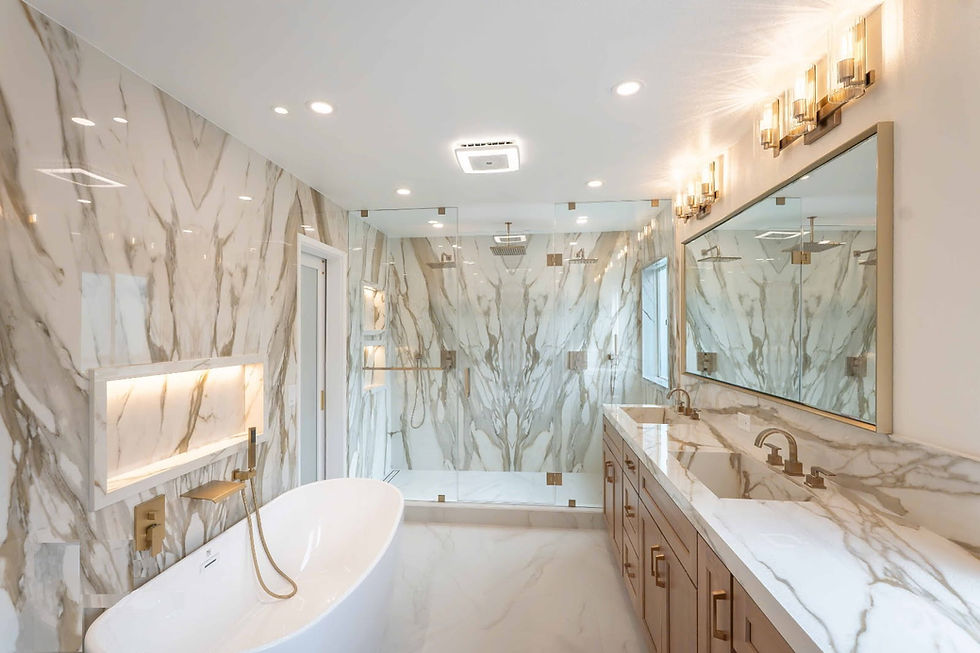
How to choose between porcelain and quartz surfaces for bathrooms?

Porcelain bathroom surfaces split opinion right down the middle. Half the renovators you talk to swear by porcelain slabs for vanities and shower walls; the other half won't consider anything but quartz. The real answer depends on your bathroom's specific demands.
Below, you'll learn how to weigh durability/level of resistance, the cost, looks, and upkeep so you can filter the noise and pick the right surface for your bathroom with confidence.
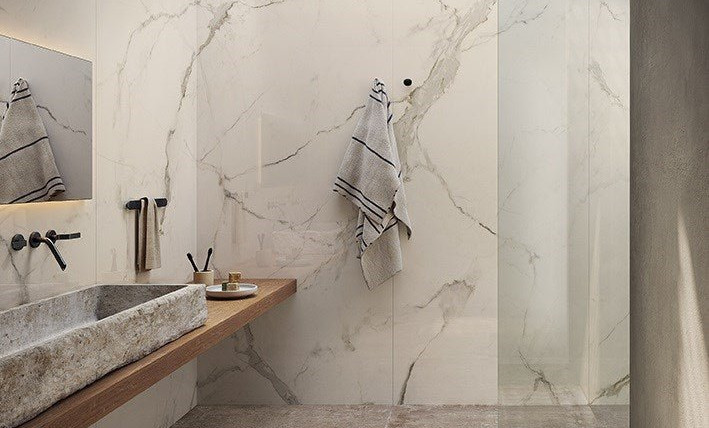
Key Points When Comparing Porcelain And Quartz Slabs Head-to-Head
Porcelain slabs are fired at extremely high temperatures to create a dense, nearly impervious ceramic with near-zero water absorption, making them the stronger pick for shower surrounds, tub decks, and any surface with direct UV exposure or prolonged moisture contact. Large format porcelain slabs are 12mm thick, so a 55-square-foot slab typically weighs 200-250 pounds less than a traditional engineered quartz, which is standard 20mm thick. For areas in the home with tight corners, high-ceiling porcelain slabs justify the extra labor hours needed to prepare.
Quartz surfaces blend ground natural quartz crystals with polymer resins to create a non-porous slab that Consumer Reports' bathroom vanity testing scored "Very Good" for stain resistance, outperforming stone slabs on overall durability for vanity tops where cosmetics and hair products spill regularly.
Installed porcelain typically costs more per square foot than quartz slab material, since porcelain slabs require specialized cutting tools and handling that not all fabricators have mastered. Our best advice is to find a fabricator that stands behind their work, a stone mason that actually gives guarantees on their craft.
Porcelain resists discoloration from harsh bathroom cleaners better than quartz, whose resin component can dull under prolonged exposure to bleach-based products, making porcelain more forgiving if you spray and forget.
Quartz generally supports more decorative edge profiles because the material is less prone to edge chipping during fabrication, while porcelain can chip at edges more easily during installation and often looks best with clean, minimal edges.
Pairing a porcelain slab shower surround with a quartz vanity top combines the strengths of each material exactly where it counts, a strategy seen more often than expected in bathroom projects that need both moisture resistance and stain protection.
Always consider this: read into the warranty specifics prior to committing, get in contact with the suppliers, ask for copies of the residential warranty form and how to register, and look over the inclusions and exclusions. Countertop Wise breaks down warranty terminology and what to look for perfectly.
What are porcelain bathroom surfaces?
Before you compare performance, you need to understand what you're actually comparing. These two materials start from completely different raw ingredients and manufacturing processes, which drives every practical difference you'll notice in a bathroom.
How porcelain slabs are made and how they have a low silica content:
Porcelain is a ceramic material fired at extremely high temperatures. That intense heat fuses clay and mineral particles into a dense, nearly impervious body. Full-format porcelain slabs, like the 126" x 64" Italian slabs at 12mm thickness carried by distributors such as Verona Quartz Surfaces, cover large expanses with minimal seams. The firing process makes porcelain naturally resistant to UV rays, heat, and moisture absorption. That last point matters more than you'd think in a bathroom, where steam and standing water are constant.
How quartz surfaces are engineered to have optimal scratch resistance: higher silica content
Quartz surfaces blend ground natural quartz crystals with polymer resins and pigments. The resin binder creates a non-porous slab that never needs sealing. That lab-backed performance makes quartz a strong default for vanity tops where cosmetics and hair products spill regularly. Natural quartz crystals rank high on the Mohs hardness scale, giving the core raw material incredible built-in toughness. During manufacturing, engineered quartz slabs are formulated with up to 90 to 95 percent natural quartz aggregate bound tightly by high-performance resins. That massive ratio of solid mineral crystals forms a tight, dense lattice across the entire surface.
When sharp metal objects or daily items drag across the top, they meet the rock-hard silica minerals rather than a soft binding material. High-pressure molding during production compresses out air pockets, locking those quartz particles in a dense matrix that resists scraping, scuffing, and abrasive wear. You get a sleek surface that stands up to heavy everyday traffic, hot curling irons, and dropped accessories without losing its finish.

Step by step: how to choose between porcelain bathroom surfaces and quartz
Now that you know what each material is, here's a practical decision process. Work through these steps in order; each one narrows your choice. Think about how the surface will be used, who is using it, and what kind of wear it will face on a daily basis.
Step 1: Assess your bathroom's moisture exposure (especially around the seams)
Ask yourself: will this surface sit inside or directly adjacent to a wet zone?
Porcelain's near-zero water absorption rate makes it the stronger pick for shower surrounds and tub decks.
For vanities that only see splashes? Either material works beautifully. Porcelain slabs just take liquid resistance a step further through extreme high-heat firing.
Quartz achieves an essential non-porous structure thanks to its polymer resin binder. As the natural quartz aggregate and resins are compacted under intense vibration and pressure during manufacturing, all air pockets are completely sealed off. Liquid stays entirely on the surface. That makes it completely impervious to water, spilled oils, dark liquids, and beauty products without ever needing a coat of liquid sealer.
Step 2: set a realistic budget
Porcelain slabs and quartz slabs sit in overlapping but distinct price bands. Installed quartz typically runs higher depending on color and complexity, while porcelain slab installations often cost less for the material, though you can close that gap with fabrication costs.
We'd caution against choosing purely on sticker price. A cheaper material that needs replacing in five years costs more than a pricier one that lasts twenty. Factor in your fabricator's experience with each material, because porcelain slabs require specialized cutting tools and handling.
Factor | Porcelain Slabs | Quartz Surfaces |
Material Cost Range (per sq ft) | Lower Range | Low-To-Medium Range |
Sealing Required | No | No |
UV Resistance | Strong | Limited To Indoor Uses |
Water Absorption | Near Zero | Non Porous |
Heat Resistance | High | Moderate |
Step 3: Evaluate your design goals
Do you want a full-height backsplash with book-matched veining that looks like a single slab of marble? Porcelain slabs excel here because their large format and printing technology reproduce natural stone patterns across massive surfaces with stunning continuity.
Quartz offers a wider spectrum of solid, speckled, and marble-look colors, and its depth of pattern runs through the slab body rather than sitting on the surface. If you want a uniform Calacatta look on a vanity countertop, quartz delivers that consistently.
Here's an honest trade-off: porcelain can chip at edges more easily than quartz during installation. Once you install it, both hold up great, but if your design calls for a lot of exposed edges like a floating shelf detail, quartz's resilience gives it an advantage.
Step 4: Think about long-term maintenance
Neither material needs sealing, which already puts both ahead of natural quarried stone. Daily cleaning with a non-abrasive cleaner handles both surfaces.
The difference shows up in specific scenarios and knowing this can help in the long term.
Porcelain resists discoloration from harsh bathroom cleaners better than quartz, whose resin component can dull under prolonged exposure to bleach-based products. If you're the type to spray and forget, porcelain is more forgiving. Quartz, on the other hand, feels warmer to the touch and hides minor surface wear more gracefully over time. For a kids' bathroom that takes daily abuse, that practical durability matters.
Step 5: Confirm material certifications | Don't skip this:
Bathrooms directly affect your indoor air quality, especially in smaller spaces with limited ventilation. Imagine using a natural (unfilled & quarried) travertine that has deep pockets/holes that, when wet, can grow bacteria. Look for surfaces backed by Green Guard Gold certification for low chemical emissions, best manufacturing practices, and NSF certification for safety grade standards.
Verona Quartz Surfaces carries both quartz and Italian porcelain slabs with these certifications, along with eco-friendly manufacturing practices. The collection at veronaquartz.com covers over 200 colors across both material types, which makes side-by-side comparison straightforward when you're narrowing your choice.
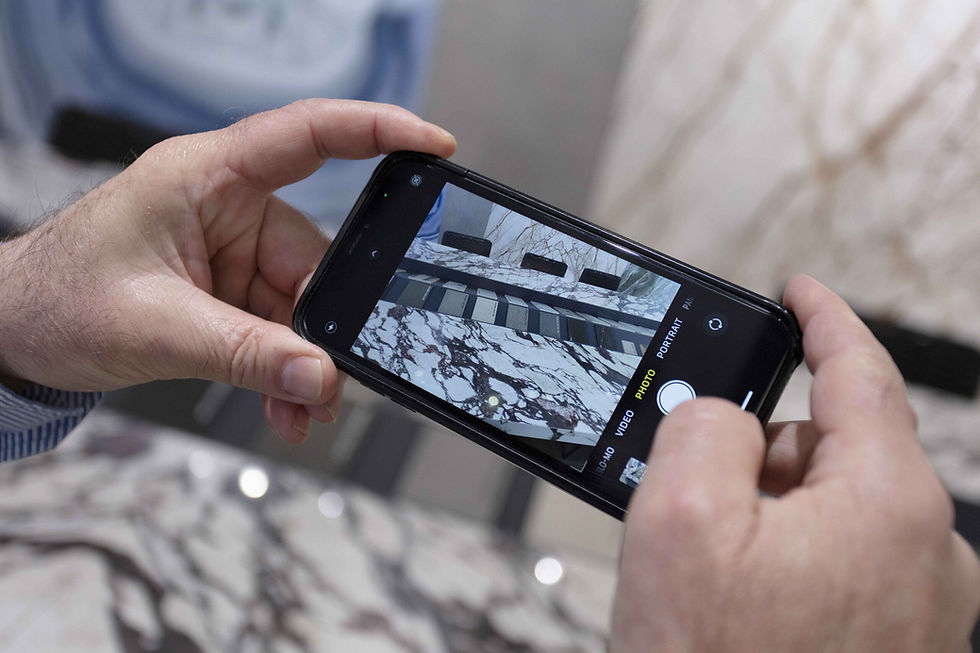
When you should pick porcelain or quartz;
After walking through those steps, we see clear patterns:
Choose porcelain slabs when your project includes shower walls, tub surrounds, outdoor-adjacent bathrooms, or any application with direct UV exposure. Porcelain won't fade or yellow near a window the way quartz resins can over years.
Choose quartz when you're primarily surfacing vanity countertops, want maximum stain resistance against cosmetic products, or prefer a thicker slab profile with more edge detail options. Quartz also gives fabricators more flexibility for undermount sink cutouts.
What if your bathroom needs both? Mixing materials is a top trend we are seeing in 2026
We see this more often than you'd expect. A porcelain slab shower surround paired with a quartz vanity top combines the strengths of each material exactly where it counts.
Verona's Top 5 New Porcelain Picks In 2026:
Our Top 5 Quartz Slab Picks In 2026:
Frequently Asked Questions
Can you install porcelain or quartz over existing tile in your bathroom?
Answer: In some remodels, you can install slabs over existing surfaces, but it depends on how flat your substrate is, how your wall is structured, and how you manage moisture. Have a qualified installer verify load capacity, waterproofing continuity, and whether removing tile will prevent future failures.
What edge profiles work best for porcelain versus quartz in your bathroom vanities?
Answer: Quartz generally supports more decorative edge profiles because the material is less prone to edge chipping during fabrication. Porcelain often looks best with clean, minimal edges, or mitered builds that create a thicker look while keeping the visible edge sleek.
How do you choose the right thickness for your bathroom vanity top or shower wall slab?
Answer: Match thickness to your application and support structure. For vanities, thicker builds may improve the visual weight, while for walls, thinner panels can reduce load and simplify installing them when you pair them with the correct backing system.
Do porcelain or quartz surfaces affect slip resistance on your bathroom floors?
Answer: Slip resistance depends primarily on the surface finish and texture. If you are considering either for flooring, ask for the wet DCOF or equivalent slip rating, and choose finishes designed for wet areas.
What should you ask your fabricator or installer before committing to either material?
Answer: Ask about their experience with your specific application, their process for placing seams and waterproofing transitions, and what warranty covers fabrication and installation. Request photos of similar bathroom projects, and confirm how they handle sink cutouts, corners, seam matching, and penetrations.
How do you plan seam placement to make your design look more seamless?
Answer: Start by mapping the most visible sightlines, then place seams in less noticeable areas like corners, behind mirrors, or along natural design breaks. For vein patterns, ask about layout approval before fabrication so veining direction and seam alignment look intentional.
Are there sustainability differences between porcelain and quartz for your bathroom projects?
Answer: Environmental impact varies by manufacturer, including recycled content, energy sources, and transport distance. Ask for product-specific documentation such as Environmental Product Declarations (EPDs) or recycled content statements to compare options beyond basic marketing claims.
Match your bathroom surfaces to your actual needs
The right choice between porcelain bathroom surfaces and quartz isn't about one being 'better.' It's about matching the material to your bathroom's actual conditions, your budget's real limits, and the maintenance habits you'll follow. Work through the five steps above, and you'll arrive at a confident answer. Verona Quartz Surfaces, a family-owned California company and the largest distributor of Italian porcelain slabs in Los Angeles, stocks both quartz and porcelain collections with Green Guard Gold and NSF certifications. With over 150 five-star reviews on Google and Yelp plus three consecutive Best of Houzz awards, they back every recommendation with hands-on expertise. Order samples from Verona Quartz Surfaces to compare both materials in your actual bathroom lighting before you commit.