


Porcelain Slabs: The Essential Design & Buying Guide

Large format porcelain slabs solve a painful problem many homeowners face mid-renovation: sticker shock. It’s that moment you realize the stunning quartzite or marble you’ve dreamed of comes with a price tag that’s far beyond what’s left in the budget.
Porcelain slabs, typically 127"×64" inches have a usable 50+ square feet that cover those same surfaces with better seam matching and no sealing required. With Grand View Research reporting USD 118.77 billion in global porcelain tiles market revenue in 2025, the material has moved well past niche status. Modern porcelain slabs recreate the natural imperfections (fissures & cracks) found in treated stones like quartzite and onyx by using 3D technology. If you are looking for textured slabs that look like quarried stone but don't come with sticker shock, stick around!
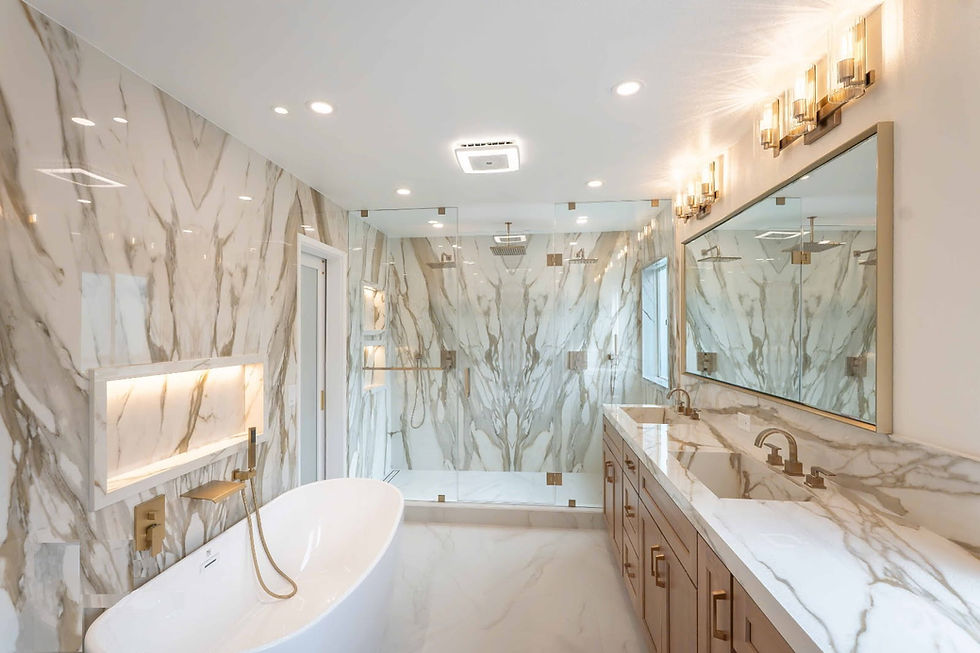
Below, you'll learn how to choose the right slab, avoid costly mistakes during installation, and decide whether porcelain fits your project's budget and style.
What Are Large Format Porcelain Slabs?
A porcelain slab is a single, large-format panel made from refined clay fired at extremely high temperatures, usually above 1,200°C (2,200°F).
That firing process creates a near-zero porosity surface, which means the material barely absorbs water, resists stains, and holds up against heat.
Don't confuse these with standard porcelain tiles. Tiles are typically 12×24 inches or smaller and require grout joints every foot or so. Slabs, on the other hand, can span your entire kitchen island in one piece. Porcelain slabs are also thicker than porcelain tile, the standard porcelain tile in the US market is typically up to 9MM thick, and our large format porcelain slabs are 12MM thick with a reinforced fiberglass mesh.
Porcelain slabs vs. tiles: the real difference
Size matters here more than you'd expect. Porcelain slabs are thicker than tiles.
A single slab measures over 10 feet long, which means fewer seams on your countertops, feature walls, and shower surrounds. Fewer seams reduce grout maintenance and give your spaces a smooth, unbroken look.
How to choose the right porcelain slab
Now that you know what distinguishes a slab from a tile, the next question is practical: which slab do you actually need?
The answer depends on where it's going and what you're willing to spend.
Step 1: Define The Application
Where your slab will live dictates your minimum thickness and finish type.
Kitchen countertops come in 12 mm or 20 mm thickness and need a surface that handles knife work, hot pans, and daily scrubbing.
Bathroom walls and shower surrounds typically require 12 mm, as the slab covers large areas with minimal joints, reducing mold-prone grout lines.
Flooring: 9 mm to 12 mm for interior floors. Go thicker for high-traffic commercial spaces.
Exterior cladding and outdoor counters should be at least 12mm with a textured or matte finish to handle freeze-thaw cycles.
Step 2: Pick A Finish That Fits Your Lifestyle
Polished finishes look striking because they mimic the depth of natural marble or granite.
But they show fingerprints and water spots more readily than matte or honed options.
If you have kids or cook frequently, a matte or satin finish hides daily wear better. For a feature wall or fireplace surround that won't see heavy contact, polished finishes work well.
Step 3: Choose A Pattern And Color
Modern porcelain manufacturing replicates the veining of Carrara/Caalacatta marble, the warmth of travertine, and even the texture of concrete or wood. Modern porcelain slabs, especially the ones made in Italy, give you more variety, clarity, and depth! When browsing options like Calacatta patterns or other marble-inspired designs, request full-slab samples rather than small chips. A 4-inch sample won't show you how the veining reads across your 10-foot countertop.
Honest Caveat: porcelain patterns repeat. Even the best digital printing technology produces slabs that everyone will have at one point. Natural stone never repeats. Once the block is extracted from the earth, that batch of slabs was formed by nature over thousands of years, so it won't be found while excavating again. If absolute uniqueness matters to you more than maintenance ease, that's a trade-off worth acknowledging.

Porcelain Slabs Compared To Other Countertop Materials
How does porcelain stack up against the surfaces you're probably also considering?
Here's a straightforward comparison.
Feature | Porcelain Slabs | Natural Stone (Granite/Marble) | Quartz (Engineered) |
Stain Resistance | Excellent: near-zero porosity | Requires sealing (marble stains easily) | Very good: resin binder resists most stains |
Heat Resistance | Excellent: withstands direct heat | Good (granite), moderate (marble) | Moderate: resin can scorch above 300°F |
UV Resistance | Excellent: won't fade outdoors | Generally good (unless heavily treated) | Poor: yellows in direct sunlight |
Weight per sq ft | 7 lbs (12MM) | ~13–18 lbs (20MM) | ~10–12 lbs (20MM) |
Seam Visibility | Minimal (large format) | Moderate (slab-dependent) | Minimal |
Outdoor Use | Yes | Yes (with sealing) | No: not UV stable |
Porcelain's standout advantage is versatility.
It's one of the few materials you can use on your countertops, floors, walls, and outdoor surfaces without changing products. If you're weighing different countertop materials, porcelain earns serious consideration for kitchens that open to outdoor living areas, where a single material creates visual continuity. That said, porcelain is harder to cut and fabricate than quartz. Repairs are also more difficult because you can't fill a deep chip in porcelain as invisibly as one in quartz. We'd steer you toward quartz for a tightly budgeted indoor-only kitchen where fabrication simplicity and reparability matter more than heat and UV performance.
Installation: what to expect and what to demand
This is where porcelain slab projects succeed or fail. Finding the right stone mason can make your project feel like a breeze not a burden. The material is unforgiving during fabrication. One mistake on a moderately expensive slab isn't something you can just buff out. Choose a fabricator that stands behind their work, most fabricators in the Los Angeles area give guarantees that if they were to damage or make a mistake on your slabs that they will eat the cost to replace it.
Step 4: Hire A Certified Fabricator
Ask your countertop installer specifically whether they have worked with large format porcelain in the past year, and request references or photos. Although porcelain slabs have come a long way from their inception in 2016, the cutting and handling techniques differ from granite or quartz fabrication. Extra-large porcelain requires laying the slab down on bridge saws with diamond-tipped blades designed for cutting sintered materials. A fabricator using standard granite tooling risks cracking your slab during cutting. Fabricators can't just do the work in the driveway, they need proper tooling. Think of it this way: can you cut wood with a metal blade on your sawzall? For a proper job, doing the work at the shop makes all the difference. From time to time, we get asked to deliver slabs at the job site, but we always decline because of the sheer size of our large format slabs and the risks involved with having 10 foot x 5ft + materials being unloaded and worked on at the job site. Taking the shortcut may end up costing you more; let's do better for the tradesmen and for better end results in our living spaces.

Step 5: Prepare For Delivery And handling
Confirm with your supplier before delivery day that they deliver slabs vertically on A-frame racks and use suction-cup lifters, vacuum slab lifters, or forklifts for placement.
Make sure your installation site is accessible. Tight hallways, narrow doorways, and tight stairwells can turn a straightforward install into a logistical headache.
Step 6: Verify Substrate And Support
For countertop applications, your slab needs a solid, level substrate.
Many installers use a plywood base topped with a thin-set adhesive rated for porcelain. For wall cladding, mechanical anchoring systems or structural adhesive handle the weight.
Budgeting For Porcelain Slabs
Material costs for porcelain slabs generally vary depending on brand, thickness, and finish.
Italian-made slabs from premium manufacturers sit at the higher end. Domestic or Asian-produced options cost less but may offer fewer pattern options.
Fabrication and installation typically add additional costs per square foot. That's comparable to mid-range granite and slightly below high-end quartz when you factor in the full installed cost. When comparing countertop choices, get quotes that include material, fabrication, delivery, and installation as a single number to avoid surprise line items. According to Research and Markets data, porcelain accounts for 50.78% of the global ceramic tile market by revenue. That market share means more manufacturers competing for your business, which generally keeps pricing reasonable relative to niche materials.
Where to save and where to spend
Spend on thickness for your countertops. 12 mm slabs offer the most versatile thickness for countertops, walls, backsplashes, and make it easy to match the stone slabs everywhere.
Thicker slabs feel more substantial under your hands and resist flex during use.
Save on wall applications. A 6 mm slab performs identically to a 20 mm slab on a vertical surface.
Maintenance and long-term care
Your porcelain slabs require almost nothing in terms of ongoing maintenance. No annual sealing. No special cleaners. Warm water and a mild dish soap handle your daily cleaning.
For tougher stains (dried food, hard water marks, or marker) a non-abrasive cleaner works fine.
Avoid steel wool or highly acidic cleaners on polished finishes, as they can dull the surface over time. We also really like Bar Keepers Friend for a gentle, strong clean.
One thing we want to flag: while porcelain resists scratches better than marble, it isn't scratch-proof. Dragging a cast-iron pan across a polished surface will leave marks. Use trivets and cutting boards when you're working on the surface. If you are more hands-on, opt for a matte or natural finish - most of our new collections in 2026 feature silk 3D and honed surfaces that are so much more forgiving!

Portland Beige 
Travertine 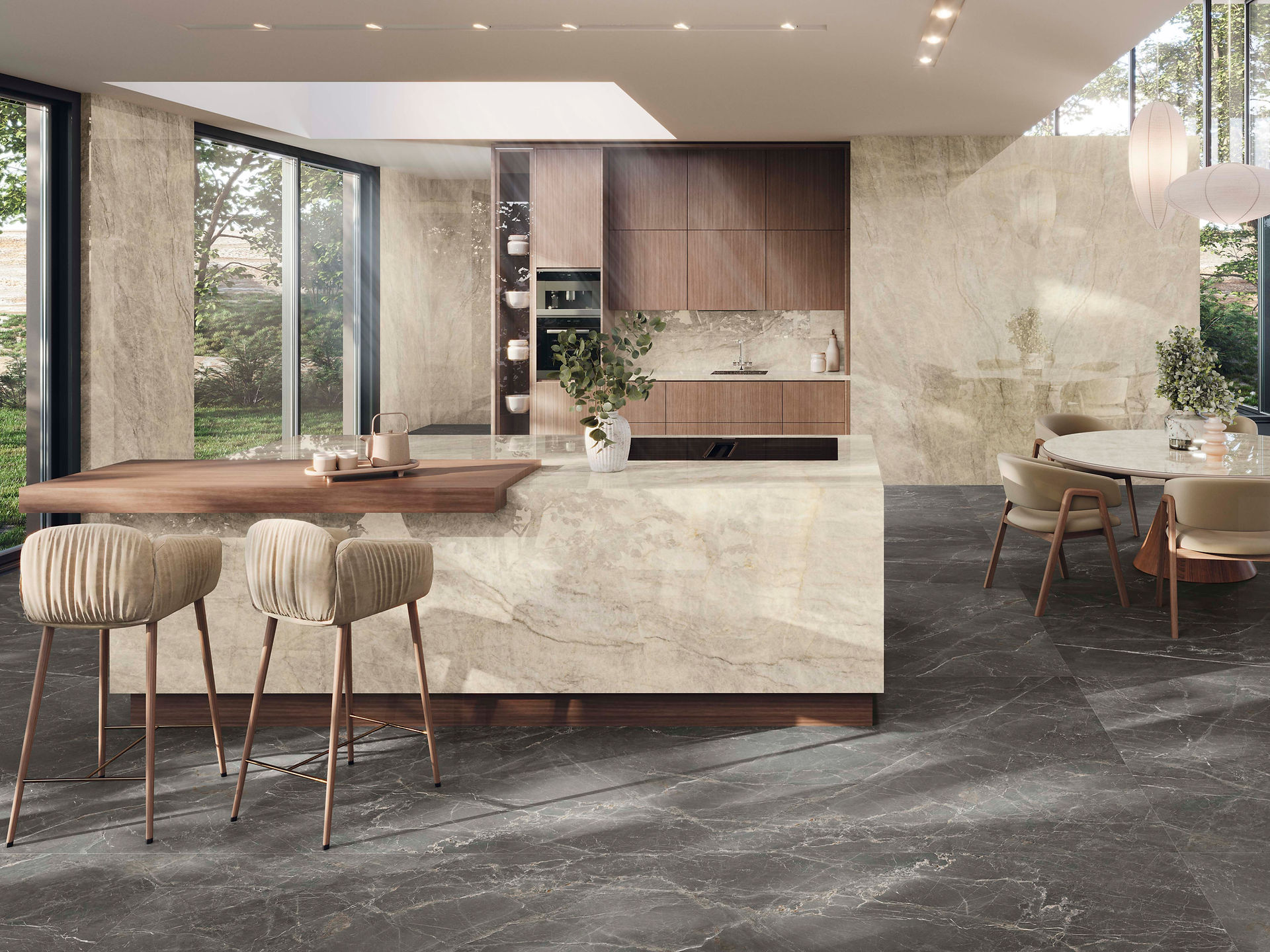
IL Tajmahal
Frequently Asked Questions:
FAQ 1: Can porcelain slabs be mitered for a thicker-looking countertop edge?
A: Yes, many fabricators create mitered edges by joining strips at an angle to give the appearance of a thicker, more monolithic slab. Ask about seam placement at corners and what reinforcement method they use so your edge holds up to daily impact.
FAQ 2: What should you look for when inspecting a slab before fabrication starts?
A: Check for surface defects, warpage, and consistency in color and sheen under showroom lighting, then view it again under lighting similar to your home. Confirm your slab is from the same dye lot if you need multiple pieces to keep the look as consistent as possible.
FAQ 3: How do you plan veining direction and seam placement for the most natural look?
A: Request a digital layout (often called a slab map) that shows cut lines, veining flow, and any bookmatching. This helps you approve where focal areas land, like a waterfall edge or backsplash run, before anything is cut.
FAQ 4: Are porcelain slabs a good choice for a full-height backsplash behind a range?
A: They can be an excellent option because the surface is stable at typical cooking temperatures and easy to wipe clean. Confirm your installer uses the correct heat-rated setting materials and plans for outlets, pot fillers, and tight-tolerance cuts.
FAQ 5: What edge profiles work best with porcelain slabs, and why?
A: Clean, simple edges like eased & mitered are popular because they reduce the risk of chipping and complement the material's modern look.
FAQ 6: How can you reduce the risk of chipping during everyday use?
A: Focus on smart design details, such as slightly softened edges, adequate corner radiusing, and avoiding unsupported overhangs. In use, avoid striking the edge with heavy cookware, and consider protective habits like using mats for small appliances that vibrate.
FAQ 7: What questions should you ask about warranty coverage for porcelain slabs?
A: Ask what is covered by the manufacturer versus the fabricator, since installation issues and fabrication defects are often handled separately. Get clarity on exclusions (chips, impact damage, improper cleaners) and whether you must follow specific care guidelines to keep your coverage valid.
Your next step toward the right slab
Porcelain slabs reward you when you do homework upfront on thickness, finish, fabrication requirements, and budget.
The material handles nearly anything you ask of it, from kitchen counters to outdoor cladding, with minimal upkeep. But it demands a skilled fabricator and careful planning during delivery, fabrication and installation.
Start by narrowing down your application, then request full-slab viewings rather than relying on small samples. The pattern you love on a 4-inch chip might not read the way you expect at full scale. Ask for the sample, get images and videos of the slab if you can't make it to the slab yard.
Verona Quartz Surfaces (the largest distributor of Italian porcelain slabs in Los Angeles) carries an extensive collection of large-format porcelain in a range of finishes and thicknesses. If you're ready to see these slabs in person, visit Verona Quartz to browse their current Italian porcelain and marble-look quartz collections, or schedule a showroom visit to compare your options side by side.


